Almond Crusted Salmon with Veggies
Highlighted under: Shortcut Cooking
I absolutely love preparing Almond Crusted Salmon with Veggies because it brings vibrant flavors together effortlessly. Each time I make this dish, I’m reminded of how the buttery crunch from the almonds enhances the tender salmon while the roasted vegetables add an amazing freshness. It’s not only a visually appealing meal but also a nutritious one, perfect for weeknight dinners or when entertaining guests. The ease of preparation allows me to enjoy the process as much as the delicious outcome.
Each time I prepare Almond Crusted Salmon with Veggies, I feel inspired by the balance of textures and flavors. I remember my first attempt when I underestimated how well the nutty crust complements the rich fish. To ensure a perfect crust, I learned to finely chop the almonds, which gives a delightful crunch while allowing the salmon to shine through.
Another tip that consistently improves my dish is to season the vegetables with lemon before roasting. This brightens their natural flavors, making the asparagus and bell peppers an excellent side with the salmon. This dish has become a staple in my kitchen!
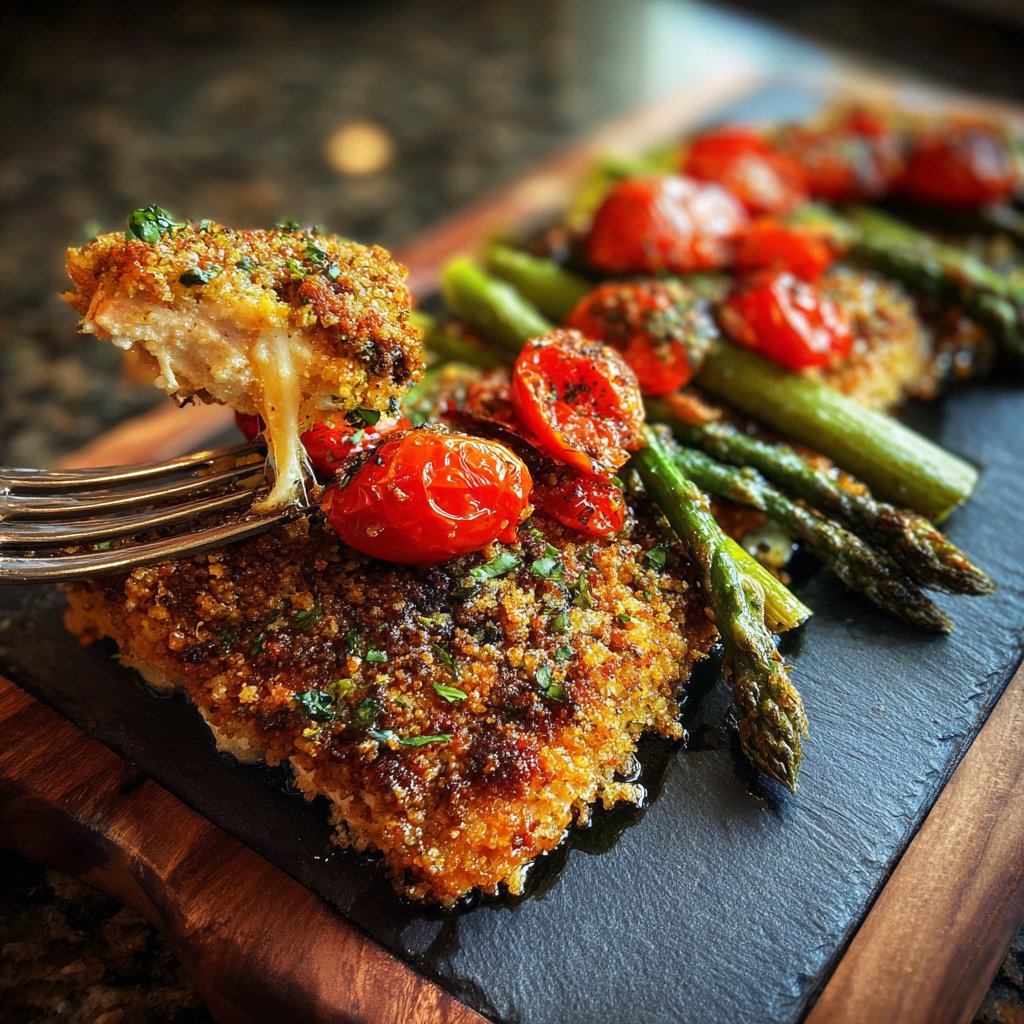
Why You'll Love This Recipe
- Crunchy almond crust that elevates the salmon
- Colorful and nutritious veggie medley
- Quick and easy to prepare for any occasion
Choosing the Right Salmon
When selecting salmon, look for fillets that are firm to the touch with a vibrant color. Fresh or frozen wild-caught salmon tends to have a richer flavor compared to farmed varieties. If using frozen, allow it to thaw completely in the refrigerator for at least 12 hours before cooking to ensure even cooking and the best texture. Remember that skin-on fillets can include more flavor and moisture, so consider leaving the skin intact.
You can also try different cuts of salmon, such as king or sockeye, for a unique taste and texture. If you prefer a milder fish, consider using trout as a substitute; it pairs well with the almond crust and will absorb flavors nicely when you season it properly.
Perfecting the Almond Crust
For the almond crust, be sure to process the almonds finely but not to a powder, as you want some texture to add crunch. I recommend using a food processor to achieve an even consistency but avoid over-processing to maintain a bit of graininess. If you desire extra flavor, consider toasting the chopped almonds lightly in a dry skillet over medium heat for about 2-3 minutes until golden before pressing them onto the salmon.
While Dijon mustard adds a tangy kick, you can swap it with other mustard varieties, such as honey mustard for a sweeter profile or whole grain mustard for added texture. Just ensure your chosen mustard complements the dish's brightness; otherwise, it can overpower the delicate salmon flavors.
Serving Suggestions and Variations
To elevate your meal, serve the almond crusted salmon with a side of cooked quinoa or wild rice. These grains not only add an extra layer of nuttiness but also absorb the flavors of the roasted veggies and salmon juices beautifully. You can also garnish the dish with fresh herbs like parsley or dill for an aromatic finish.
For a variation, consider adding other seasonal vegetables to the baking sheet, such as zucchini or cherry tomatoes. These can introduce sweet bursts and added nutrition to your dish. Just ensure all veggies cut to similar sizes to promote even cooking, and adjust baking times if required, checking for doneness.
Ingredients
For the Salmon
- 4 salmon fillets
- 1 cup almonds, finely chopped
- 2 tablespoons Dijon mustard
- Salt and pepper, to taste
- 1 tablespoon olive oil
For the Veggies
- 1 cup asparagus, trimmed
- 1 cup bell peppers, sliced
- 1 tablespoon olive oil
- Salt and pepper, to taste
- Juice of 1 lemon
Steps
Preparation
Preheat your oven to 400°F (200°C).
Prepare Veggies
In a bowl, toss asparagus and bell peppers with olive oil, lemon juice, salt, and pepper. Spread them on one side of a baking sheet.
Prep Salmon
Season the salmon fillets with salt and pepper. Brush Dijon mustard on each fillet and press the chopped almonds onto the mustard to create an even coating.
Bake
Place the coated salmon fillets on the baking sheet next to the veggies. Bake for 20 minutes or until the salmon flakes easily with a fork and the veggies are tender.
Pro Tips
- For an extra burst of flavor, consider adding minced garlic or fresh herbs to the veggie mix before roasting.
Storage Tips
If you have leftovers, store the salmon and veggies separately in airtight containers in the refrigerator. The salmon is best consumed within 1-2 days, while roasted veggies can last up to 3-4 days. When reheating, use a gentle method such as microwaving on low or placing in a preheated oven at 350°F (175°C) to avoid drying out the fish.
For longer storage, you can freeze the almond crusted salmon. Wrap the cooked salmon tightly in plastic wrap and then in aluminum foil to prevent freezer burn. It can be frozen for up to three months. When ready to eat, thaw it in the refrigerator overnight and reheat gently to preserve moisture.
Troubleshooting Common Issues
If the salmon doesn’t appear to be cooking evenly, check your oven temperature with an oven thermometer. Sometimes, ovens may misreport temperatures, leading to undercooked or overcooked fish. The ideal internal temperature for cooked salmon is 145°F (63°C) when measured with a food thermometer, so using this can help you prevent these pitfalls.
Another common issue can be the almond crust falling off during cooking. To mitigate this, ensure the mustard layer is adequately applied for the crumbs to adhere better. Additionally, pressing down firmly on the almonds as you coat the salmon helps them stick during baking, ensuring a beautifully crunchy crust that remains intact.
Questions About Recipes
→ Can I use other nuts instead of almonds?
Yes, you can substitute with walnuts or pecans for a different flavor profile.
→ How do I know when the salmon is cooked?
The salmon should flake easily when tested with a fork and reach an internal temperature of 145°F (63°C).
→ Can I prepare the crust in advance?
Absolutely! You can prepare the almond crust up to a day ahead and store it in the refrigerator.
→ What vegetables work well with this recipe?
Aside from asparagus and bell peppers, you could use zucchini, broccoli, or green beans.
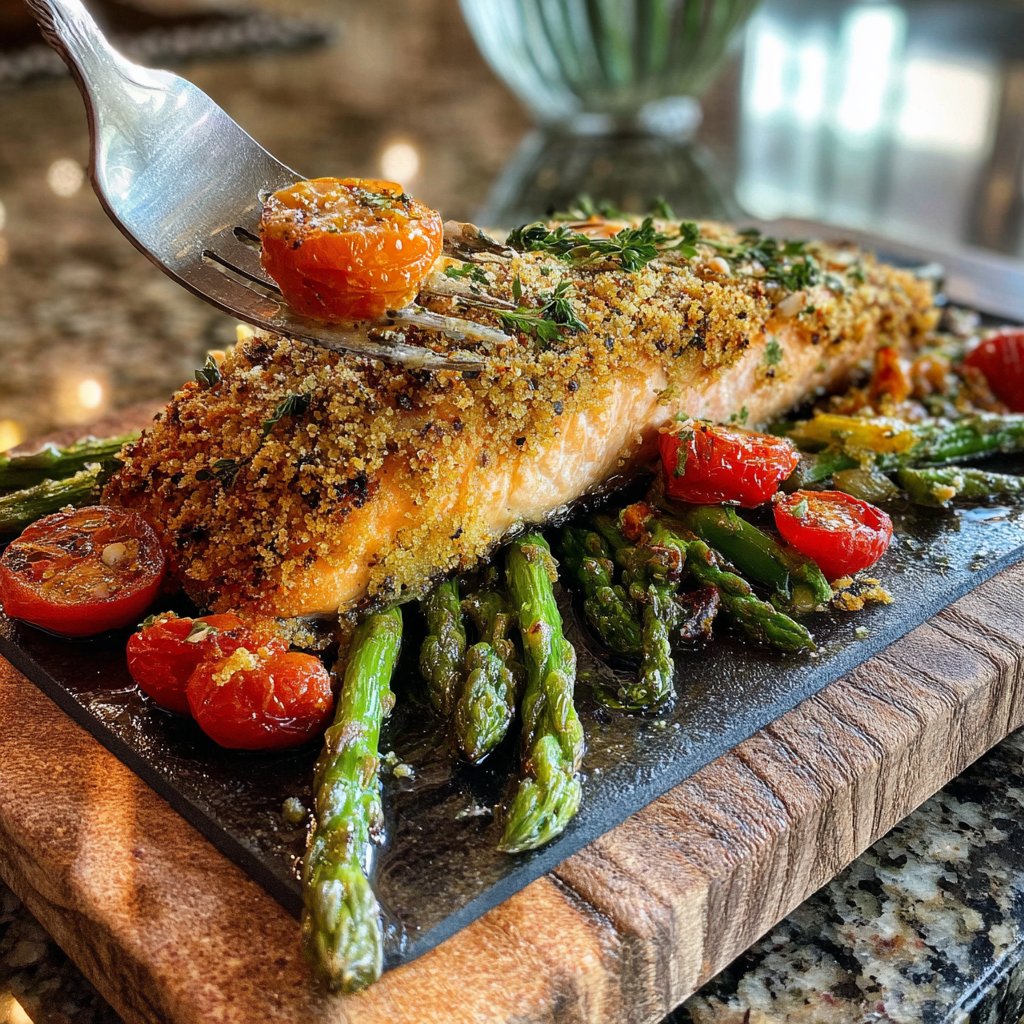
Almond Crusted Salmon with Veggies
Created by: The Chefunacooks Team
Recipe Type: Shortcut Cooking
Skill Level: Intermediate
Final Quantity: 4.0
What You'll Need
For the Salmon
- 4 salmon fillets
- 1 cup almonds, finely chopped
- 2 tablespoons Dijon mustard
- Salt and pepper, to taste
- 1 tablespoon olive oil
For the Veggies
- 1 cup asparagus, trimmed
- 1 cup bell peppers, sliced
- 1 tablespoon olive oil
- Salt and pepper, to taste
- Juice of 1 lemon
How-To Steps
Preheat your oven to 400°F (200°C).
In a bowl, toss asparagus and bell peppers with olive oil, lemon juice, salt, and pepper. Spread them on one side of a baking sheet.
Season the salmon fillets with salt and pepper. Brush Dijon mustard on each fillet and press the chopped almonds onto the mustard to create an even coating.
Place the coated salmon fillets on the baking sheet next to the veggies. Bake for 20 minutes or until the salmon flakes easily with a fork and the veggies are tender.
Extra Tips
- For an extra burst of flavor, consider adding minced garlic or fresh herbs to the veggie mix before roasting.
Nutritional Breakdown (Per Serving)
- Calories: 400 kcal
- Total Fat: 26g
- Saturated Fat: 3g
- Cholesterol: 90mg
- Sodium: 180mg
- Total Carbohydrates: 12g
- Dietary Fiber: 4g
- Sugars: 3g
- Protein: 34g