Avocado Pesto Salmon Bowl
Highlighted under: Islands Food Recipes
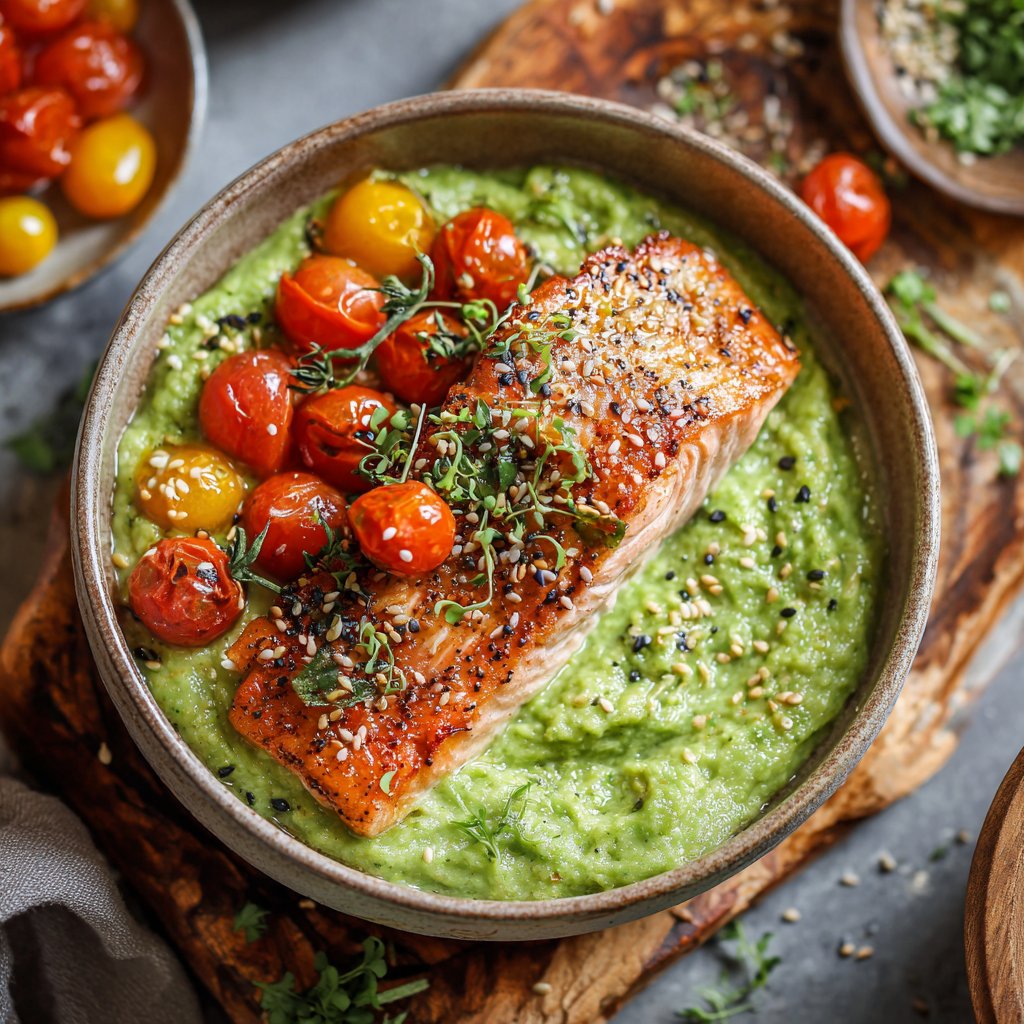
I absolutely love making this Avocado Pesto Salmon Bowl because it's a vibrant, nutritious meal that's packed with flavor. Preparing the creamy avocado pesto from scratch not only elevates the dish but also infuses it with fresh ingredients that I can control. The combination of perfectly roasted salmon and the bright green pesto is incredibly satisfying. Plus, it comes together in under 30 minutes, making it an ideal option for busy weeknights or a laid-back weekend lunch.
When I first tried making this Avocado Pesto Salmon Bowl, I thought it would be a simple dish. Little did I know, the combination of roasted salmon and homemade pesto creates a flavor explosion that makes the effort worthwhile. I like to use ripe avocados for the pesto, along with fresh basil, garlic, and pine nuts. The result is a creamy and aromatic sauce that complements the fish beautifully.
One key tip I discovered is to roast the salmon until it is just flaky, as overcooking can dry it out. I often pair this bowl with brown rice or quinoa, and I love adding seasonal veggies for extra crunch. This dish isn't just a feast for the eyes; it's incredibly nourishing!
Why You'll Love This Recipe
- Rich, creamy avocado pesto that enhances every bite
- Perfectly roasted salmon that melts in your mouth
- Quick and easy to whip up for a healthy meal
Mastering the Avocado Pesto
The avocado pesto is the star of this dish, bringing a rich creaminess that complements the texture of the salmon beautifully. Choosing a ripe avocado is crucial; it should yield slightly to gentle pressure when squeezed. This ensures that the pesto will be smooth and luscious. For a burst of freshness, I always use vibrant green basil leaves—make sure they are young and tender to avoid any bitterness.
When blending the ingredients, start with a pulse technique to combine them without over-processing. You want a texture that is creamy yet slightly chunky for added character. If the pesto feels too thick, blending in a few tablespoons of water or olive oil can help achieve the desired texture. Remember to taste it; adjusting with a pinch more salt or lemon juice can elevate the flavors, making the pesto pop.
Cooking the Salmon to Perfection
Roasting salmon is a straightforward process, but timing is key to achieving that perfect flaky texture. Preheating your oven to 400°F (200°C) creates an ideal cooking environment. I recommend checking the salmon after 10 minutes; it should be opaque and flake easily with a fork. If you find the top isn’t browning as you like, a quick broil for a minute can create that desirable crispy edge without drying it out.
If you're looking to add a little more flavor, consider marinating the salmon in a mixture of olive oil, lemon juice, and herbs for 30 minutes before cooking. This can enhance the flavor profile and moisture retention. Additionally, if you prefer grilling, placing the salmon on a grill pan over medium heat for about 5-7 minutes per side can offer a fantastic smoky flavor to this already delicious dish.
Ingredients
Gather these fresh ingredients before you start cooking:
For the Avocado Pesto
- 1 ripe avocado
- 1 cup fresh basil leaves
- 2 tablespoons pine nuts
- 2 cloves garlic, minced
- 2 tablespoons lemon juice
- Salt and pepper to taste
For the Salmon Bowl
- 2 salmon fillets
- 1 tablespoon olive oil
- Salt and pepper to taste
- 2 cups cooked brown rice or quinoa
- 1 cup cherry tomatoes, halved
- 1 cup spinach or arugula
Make sure you have everything ready to create a delicious meal!
Instructions
Follow these steps to prepare your Avocado Pesto Salmon Bowl:
Prepare the Pesto
In a food processor, combine avocado, basil, pine nuts, garlic, lemon juice, salt, and pepper. Blend until smooth, adding a little water if necessary to reach the desired consistency.
Cook the Salmon
Preheat the oven to 400°F (200°C). Season the salmon fillets with olive oil, salt, and pepper, then place them on a baking tray. Roast for about 12-15 minutes or until they are flaky.
Assemble the Bowl
In bowls, layer the cooked rice or quinoa, followed by spinach, cherry tomatoes, and a generous dollop of avocado pesto. Top with the roasted salmon fillets, and drizzle a little more pesto on top if desired.
Enjoy your colorful and nutritious bowl!
Pro Tips
- For an extra kick, add a sprinkle of red pepper flakes or some crumbled feta cheese on top before serving.
Serving Suggestions
This Avocado Pesto Salmon Bowl is versatile and can be customized to your taste. For a heartier meal, feel free to add additional toppings like sliced avocado, toasted nuts, or even a sprinkle of feta cheese. A drizzle of balsamic glaze can also bring an exciting contrast to the dish's richness. Pair it with a glass of chilled white wine for a refreshing touch.
If you're in a rush, consider preparing components in advance. The avocado pesto can be made a day or two prior and stored in an airtight container, just be sure to press plastic wrap against the surface to prevent browning. The cooked quinoa or rice can also be refrigerated, making assembly even quicker when you're ready to enjoy this vibrant bowl.
Storage and Reheating Tips
If you have leftovers, store components separately in airtight containers to maintain their integrity. The salmon can last up to two days in the fridge, while the avocado pesto is best consumed within 2-3 days due to oxidation. To refresh the pesto, stir in a teaspoon of olive oil just before serving, which can help revive its creamy texture.
When reheating, do so gently. The salmon can be warmed up in the microwave for a short burst—about 30 seconds—on medium power to avoid overcooking. If you prefer to keep the crispy texture, reheat it briefly in a hot skillet for a minute on each side. The quinoa or rice can be reheated alongside, adding a dash of water to prevent it from drying out.
Questions About Recipes
→ Can I use a different type of fish?
Absolutely! You can substitute the salmon with trout, tilapia, or even shrimp for a different flavor.
→ How can I store leftovers?
Store any leftovers in an airtight container in the fridge for up to two days. Reheat gently to avoid overcooking.
→ Can I freeze the avocado pesto?
Yes! You can freeze avocado pesto in small portions; just make sure to use it within a month for the best quality.
→ What can I serve with this bowl?
This bowl is great on its own, but you can add roasted vegetables or a fresh salad on the side for more variety.
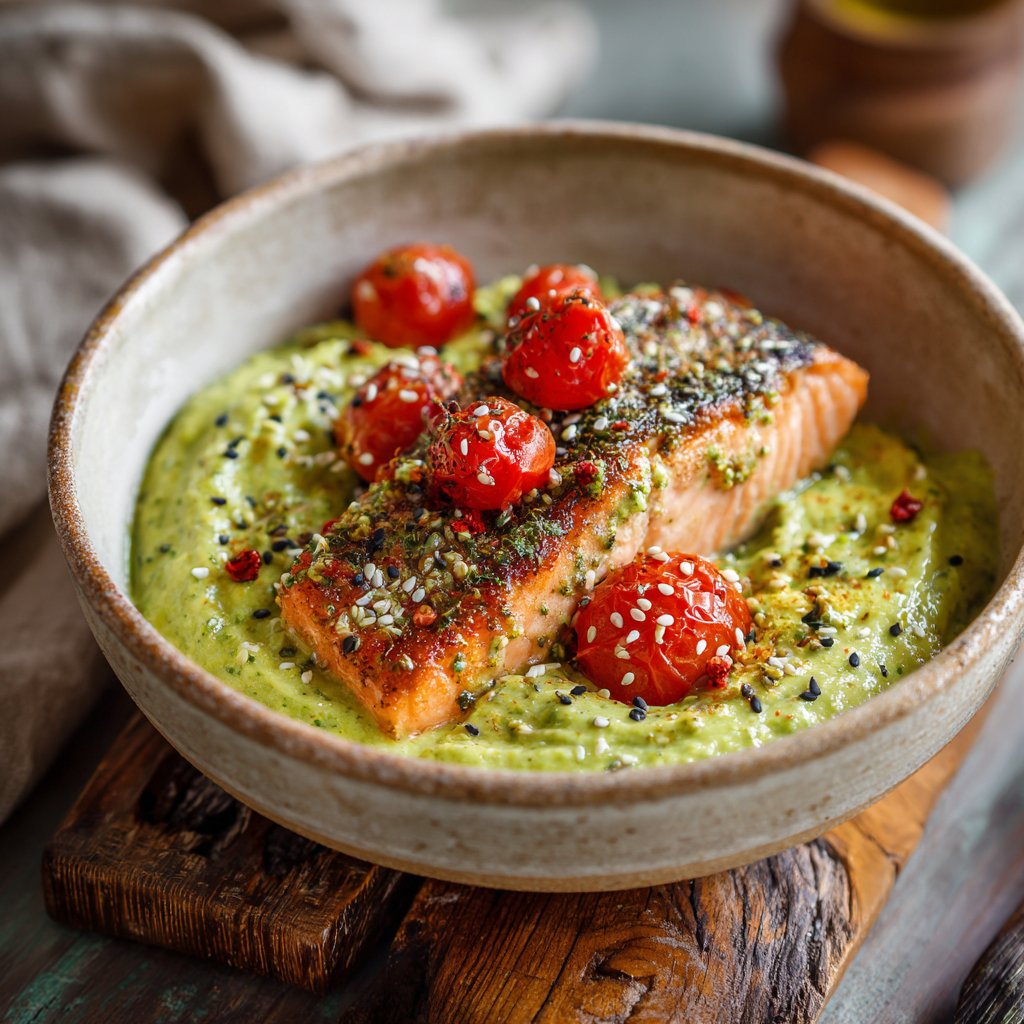
Avocado Pesto Salmon Bowl
Created by: The Chefunacooks Team
Recipe Type: Islands Food Recipes
Skill Level: Intermediate
Final Quantity: 2 servings
What You'll Need
For the Avocado Pesto
- 1 ripe avocado
- 1 cup fresh basil leaves
- 2 tablespoons pine nuts
- 2 cloves garlic, minced
- 2 tablespoons lemon juice
- Salt and pepper to taste
For the Salmon Bowl
- 2 salmon fillets
- 1 tablespoon olive oil
- Salt and pepper to taste
- 2 cups cooked brown rice or quinoa
- 1 cup cherry tomatoes, halved
- 1 cup spinach or arugula
How-To Steps
In a food processor, combine avocado, basil, pine nuts, garlic, lemon juice, salt, and pepper. Blend until smooth, adding a little water if necessary to reach the desired consistency.
Preheat the oven to 400°F (200°C). Season the salmon fillets with olive oil, salt, and pepper, then place them on a baking tray. Roast for about 12-15 minutes or until they are flaky.
In bowls, layer the cooked rice or quinoa, followed by spinach, cherry tomatoes, and a generous dollop of avocado pesto. Top with the roasted salmon fillets, and drizzle a little more pesto on top if desired.
Extra Tips
- For an extra kick, add a sprinkle of red pepper flakes or some crumbled feta cheese on top before serving.
Nutritional Breakdown (Per Serving)
- Calories: 450 kcal
- Total Fat: 28g
- Saturated Fat: 4g
- Cholesterol: 70mg
- Sodium: 300mg
- Total Carbohydrates: 32g
- Dietary Fiber: 6g
- Sugars: 4g
- Protein: 25g